
Water dripping from the ceiling in the middle of a Calgary winter is stressful, but most winter leaks can be slowed down tonight and fixed properly once you know the cause. This guide covers what to do in the next hour, then how to work out where the water is really coming from. In winter it isn’t always the roof.
What to do tonight
- Catch the water. Use buckets, a storage tote and towels. Move furniture, rugs and electronics out of the way, and cover anything you can’t move with a tarp or plastic sheet.
- Keep water away from electricity. If water is coming through a light fixture, a pot light or near an outlet, switch that circuit off at the panel and don’t touch the fixture.
- Watch for a sagging ceiling. Drywall holding water can give way all at once. Keep people and pets out of the room. If you’re comfortable doing it, put a bucket under the lowest point of the bulge and poke a small hole there with a screwdriver so it drains in a controlled way, well away from any light fixture or wiring.
- Rule out plumbing. If there’s a bathroom or pipes above the leak and the drip is steady no matter the weather, shut off your main water valve. Frozen pipes in exterior walls and attics cause winter leaks that look like roof leaks.
- Stay off the roof. Snow hides ice, skylights and the roof edge. Don’t chip at ice with a shovel or hammer either. That’s how shingles and eavestroughs get wrecked.
- Take photos and video. Photograph the ceiling, the water and the outside of the house, and note the date, time and weather. Your insurer will ask for them.
- Look in the attic if you can do it safely. Take a flashlight and step only on the joists. What you find there is the best clue to the cause (see the table below).
Then call a roofer. If water is coming in fast, the ceiling is sagging or it’s near electrical, treat it as an emergency and call right away.
Why roofs leak in winter in Calgary
Winter leaks in Calgary almost always come from one of six places. The fix is completely different for each one, which is why patching the first thing you see often doesn’t work.
1. Ice dams
Heat escaping into the attic warms the roof deck and melts the snow on top. The meltwater runs down to the cold roof edge, refreezes, and builds a ridge of ice. Water then pools behind that ridge and works its way up under the shingles. Ice dam leaks usually show up along an exterior wall or the edge of a ceiling, often with heavy icicles outside. Our ice dam guide explains how to deal with them safely.
2. Attic rain
During a cold snap, moisture from inside the house freezes onto the underside of the roof deck and the tips of the roofing nails. When a chinook rolls in, all that frost melts at once and drips through the insulation and ceiling. It often shows up in several spots at the same time, around bathroom fans and light fixtures. It looks exactly like a roof leak, but the water comes from inside the house. Here’s how to tell attic rain from a roof leak.
3. Snowmelt finding a weak spot
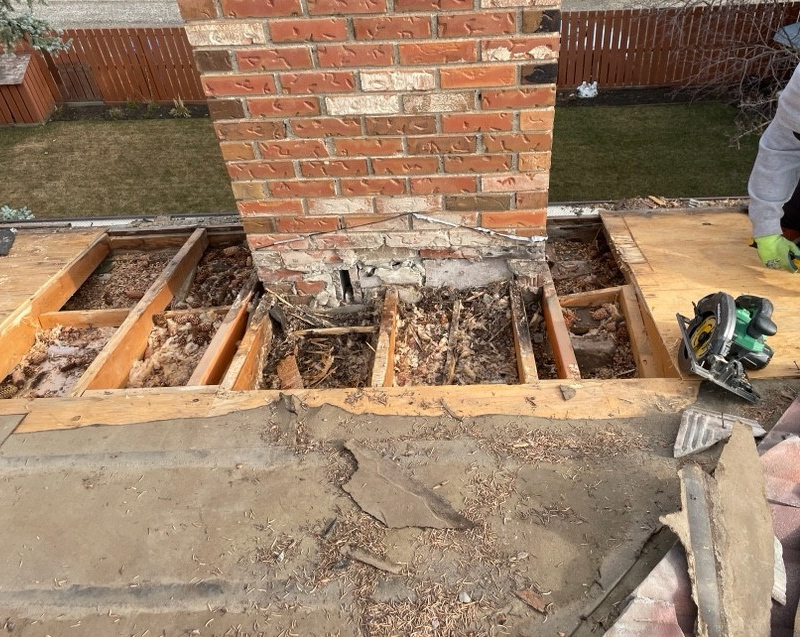
Sunny afternoons and chinooks melt roof snow, and running water finds any gap. Common culprits are lifted chimney flashing, a cracked rubber boot around a plumbing vent, failed sealant on a roof vent, worn skylight flashing and popped nails. These leaks tend to show up near something that goes through the roof, or in a valley, and often only on mild afternoons.
4. Wind damage
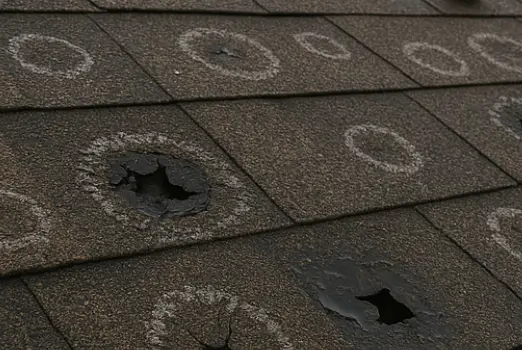
Chinook gusts lift and tear shingles, especially older ones that have lost their seal. Once a shingle is gone, snowmelt runs straight onto the roof deck. Pieces of shingle in the yard after a windstorm are the giveaway.
5. Frozen eavestroughs
When eavestroughs and downspouts freeze solid, meltwater has nowhere to go. It backs up at the roof edge, behind the eavestrough and into the fascia and soffit. Our eavestrough team can fix the slope, downspout and ice problems behind it.
6. Condensation that isn’t the roof at all
Bathroom fan ducts that run through a cold attic fill with condensation and drip back out through the fan grille. Skylights can also run with condensation on cold days. Both look like leaks. Both are fixable, and neither needs new shingles. (Here’s more on skylight leaks and condensation.)
Which one is it? A quick check
| What you notice | Most likely cause |
|---|---|
| Leak along an outside wall, with big icicles or a ridge of ice at the roof edge | Ice dam |
| Several drips or stains at once, the day a chinook arrives after a cold snap, and frost on the nails in the attic | Attic rain |
| Water dripping from a bathroom fan grille | Condensation in the fan duct |
| One wet spot near a chimney, vent, skylight or valley, on sunny or mild afternoons | Flashing or vent leak |
| Leak right after a windstorm, with shingle pieces in the yard | Wind damage |
| Water behind the eavestrough, ice packed inside it, stains on the soffit | Frozen or blocked eavestrough |
| A steady drip that doesn’t follow the weather | Possibly plumbing: shut off the water |
Can a roof leak be fixed in winter?
Yes. Most winter leaks can be stopped within days, and many can be fixed permanently in winter.
- Emergency tarping and temporary sealing stop the water fast and protect the house until a permanent repair. Emergency tarping in Calgary typically runs $500 to $1,500, depending on the roof and the damage.
- Flashing, vent boot and shingle repairs can be done on dry days once the area is cleared of snow and ice. In the cold, replacement shingles get hand-sealed with asphalt roofing cement, because their adhesive strips won’t bond on their own until warmer, sunnier weather (IKO cold-weather bulletin).
- Some work is better finished in spring, like re-roofing a large damaged section. A solid temporary repair carries you until then. If the roof can’t wait, it can be replaced in winter; here’s how a winter roof replacement works.
The bigger job is finding the real cause. New shingles won’t stop attic rain, and heat cables won’t fix a cracked vent boot. That’s why every repair starts with a proper look at the roof and the attic. Our roof inspections are free and include the attic. Most roof repairs in Calgary run between $300 and $2,500, depending on what’s damaged.
Does home insurance cover a roof leak in winter?
That depends on what caused it and on your policy. As a rule, sudden and accidental damage, like a windstorm tearing off shingles, is more likely to be covered than damage from wear and tear, lack of maintenance or long-term condensation. For ice dams, the Insurance Bureau of Canada says standard policies “commonly cover sudden and accidental water damage caused by ice dams,” while repeated damage is treated as a maintenance issue (IBC).
A few things make any claim go more smoothly:
- Tell your insurer right away. Alberta’s standard policy conditions require prompt written notice of a loss.
- Act fast to limit the damage. Insurers expect you to take reasonable steps to prevent further damage, so keep receipts for buckets, tarps and emergency repairs.
- Document everything: photos, video, dates and the weather.
- Get a written roofer’s report that says what failed and why. We provide photo documentation and reports you can send to your insurer. Here’s how we help with roof insurance claims.
How to avoid the next winter leak
- Get the attic checked. Air leaks, bathroom fan ducts, insulation and ventilation decide whether you get ice dams and attic rain. Fixing them treats the cause.
- Clear eavestroughs and downspouts before freeze-up, so meltwater can drain.
- Look after windstorms. Check the yard for shingle pieces and scan the roof from the ground.
- Fix small things in the fall: cracked vent boots, lifted flashing and failed sealant.
- Use heat cables only where they make sense, in known trouble spots like valleys and the eaves over unheated spaces. They manage ice; they don’t fix the reason it forms.
Frequently asked questions
Is a roof leak an emergency?
If water is actively coming in, the ceiling is sagging or water is near electrical, yes. Call right away. A dry stain that appeared after a chinook can usually wait a day or two for an inspection. Don’t leave it for spring, though: wet insulation stops insulating and can grow mould.
Why does my roof only leak when the snow melts?
Usually it’s an ice dam, with meltwater backing up at the roof edge, or a weak spot like flashing or a vent boot that only sees running water during a melt. If it happens the day a chinook arrives after a cold snap, attic rain is the more likely cause.
Why is my ceiling leaking after a chinook?
Most often it’s attic rain. Frost builds up in the attic during the cold snap and melts all at once when the temperature jumps. The fix is in the attic, not the shingles: stopping warm, moist air from getting up there, venting bathroom fans properly and making sure the attic is well ventilated.
Can you fix a roof leak in the winter?
Yes. Temporary repairs can be done right away, and most permanent repairs, like flashing, vent boots and replacing shingles, can be done on dry days with cold-weather methods such as hand-sealing shingles.
How much does it cost to fix a roof leak in Calgary?
Most roof leak repairs in Calgary cost between $300 and $2,500, depending on what failed and how much damage the water did. Emergency tarping typically costs $500 to $1,500. A free inspection gets you an exact price.
Does homeowners insurance cover a leaking roof?
Often, if the damage was sudden and accidental, like a windstorm, or sudden water damage from an ice dam. Leaks from wear and tear or lack of maintenance usually aren’t covered, and policies vary. Call your insurer or broker right away, and keep photos and receipts.