
Yes. Roofs get replaced in Calgary in every month of the year, January included. A winter roof replacement needs three things: dry days, temperatures the materials can handle, and a crew that follows the manufacturers’ cold-weather installation instructions. Get those right and a roof installed in winter performs the same as one installed in July.
Below is what actually changes when it’s cold, how cold is too cold, and when a winter install makes sense or waiting for spring is the smarter call.
What changes when you roof in the cold
Shingles take longer to seal
Every asphalt shingle has a strip of factory adhesive that bonds it to the shingle below. GAF says that strip “needs warmth, sun, and temperatures above 40°F/4°C to activate” (GAF). In summer it seals within days. In winter, IKO notes that sealing “might take up to several weeks” (IKO), and until then the shingles are held by their nails.
That’s why the manufacturers’ cold-weather instructions call for hand-sealing: dabs of asphalt roofing cement under the shingles, so they can’t lift in the wind before the sun does its job. It matters for your warranty too. Some manufacturers’ wind coverage only applies once the shingles have actually sealed, whether by the sun or by hand.
Cold shingles are stiffer
Asphalt gets less flexible as it gets colder. IKO says shingles become more brittle from 10°C and below, and GAF warns that below 4°C they “will lose flexibility and may crack.” So bundles are stored somewhere warm before they go on the roof, never dropped or thrown, and handled carefully where they bend over hips, ridges and valleys.
Nailing has to be dialled in
On a cold, stiff shingle, IKO warns that “the nail may break through the cool shingle’s surface,” and an overdriven nail doesn’t hold properly. Air compressors also lose pressure in the cold. Nail gun pressure gets set for the conditions and checked through the day, so every nail is driven straight and flush.
Membranes have temperature limits
The self-adhering ice and water membrane that goes along the eaves and in the valleys needs warmth to stick. Most products are rated for application from about 4°C to 7°C (40°F to 45°F). In colder weather the rolls are kept warm until they’re used, following the maker’s cold-weather procedure. CertainTeed points out that nailing a membrane down in place of a proper bond doesn’t give you the ice dam protection you’re paying for.
The roof deck has to be clear and dry
Shingles and membranes can’t go down over snow, frost or ice. Winter jobs are scheduled day by day around the forecast, and the deck is cleared and dry before anything is installed.
Days are shorter
There are fewer working hours in December than in July, so plan on a winter job taking a little longer than the same job in summer. A good crew only opens as much roof as it can close up the same day.
How cold is too cold to install shingles?
There’s no single cut-off in the building code. The shingle manufacturers set the rules in each product’s installation instructions, and most draw the line at 4°C (40°F). GAF’s official recommendation is to install at 4°C or warmer. Installing below that is allowed when the contractor follows the cold-weather steps: hand-sealing, warm storage, careful handling and adjusted nailing.
In practice, the forecast decides. Crews skip days of deep cold, snow or strong wind and work the milder ones. Calgary has a real advantage here. Even in January, the city averages about 17 days when the temperature gets above freezing (Environment Canada climate normals). An Environment Canada meteorologist told CBC that Calgary sees about 25 chinook days in a typical December-to-February. Good working days come around far more often than in most Canadian cities.
Metal roofing: the winter-friendly option
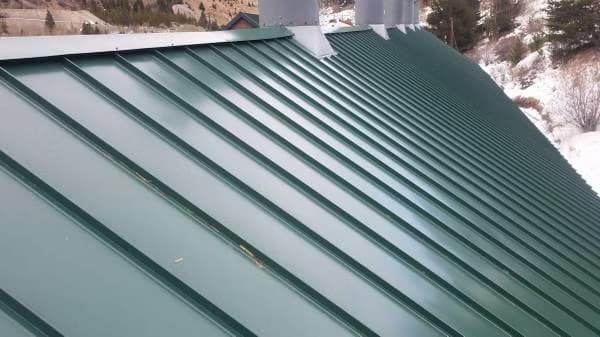
Metal roofing fastens mechanically, so cold doesn’t affect how it’s installed or how well it holds. Standing seam panels and steel shingles can go on year-round, and winter metal installs are routine for our crews. We’re also a certified Wakefield Bridge steel shingle installer.
Metal also sheds snow easily, which helps with ice dams. We add snow guards above doors, decks and walkways so snow doesn’t slide off all at once where people walk. See our metal roofing page for options.
Winter vs summer roof replacement
| Winter | Summer | |
|---|---|---|
| Scheduling | Much more open; often within days or weeks | Busy, especially after hail storms |
| Shingle sealing | May not fully seal until warm weather; hand-sealing used | Seals within days |
| Working days | Weather-dependent and shorter | Long, predictable days |
| Metal roofing | Installs normally | Installs normally |
| Best for | Leaking or failing roofs, storm damage, beating the spring rush | Any roof, any material |
Is it cheaper to replace a roof in winter?
Not automatically. Materials cost the same in January as in June, and a roof is still a roof. What winter can save you is time: shorter waits, more flexible start dates, and no rush to fix a failing roof in the middle of hail season. Ask about winter scheduling when you get your quote. To budget ahead, see what goes into roof replacement costs in Calgary and our financing options.
When a winter roof replacement makes sense
- The roof is leaking or failing and repairs aren’t holding. Waiting until spring means months of risk to your ceilings, insulation and roof deck. (If it’s leaking right now, start with what to do tonight.)
- Storm or wind damage has left the roof deck exposed or the shingles too damaged to repair.
- You’re selling or buying this spring and the roof came up on a home inspection.
- Your insurance claim has been approved. Check whether your policy sets a deadline to finish the work.
- You want it done before spring, when every roofer in Calgary gets busy at once.
When waiting for spring is smarter
- The roof is old but still watertight, and a repair or tarp can safely carry it to spring.
- A long deep freeze is forecast, and there’s no urgency.
- It’s a low-slope roof using a membrane system with its own temperature limits.
If you’d rather wait, booking in winter still gets you an early spot on the spring schedule.
What a proper winter roof replacement looks like
Use this checklist, and ask any roofer you’re considering how they handle each point:
- Work is scheduled day by day around the forecast, with no tear-off when snow or high wind is coming.
- Snow, ice and frost are cleared and the roof deck is dry before anything goes down.
- Only as much roof is opened as can be closed and watertight the same day.
- Shingles and membranes are stored warm and dry until they’re used.
- The manufacturer’s cold-weather instructions are followed: hand-sealing, careful handling at hips and ridges, and nail guns adjusted.
- Ice and water membrane goes along the eaves and in the valleys.
- The yard and driveway are cleaned up every day, with a magnetic sweep for nails (snow hides them).
We follow the manufacturers’ cold-weather instructions on every winter job. That’s what keeps your shingle warranty intact: GAF, for one, says its warranty “will not be affected if all GAF application instructions are adhered to, including cool weather provisions.” As a GAF Master Elite and CertainTeed Master Craftsman contractor, our installs are held to those manufacturers’ standards. Every Peakline roof replacement also comes with our 10-year workmanship warranty.
Do you need a permit to replace a roof in Calgary?
No. The City of Calgary says “a permit is not required to replace or repair” roofing materials (City of Calgary). Some changes do need a building permit, like switching from shingles to heavier clay tile, or structural work such as altering the roof framing.
Frequently asked questions
Is it okay to replace a roof in the winter?
Yes, as long as the work is done on suitable days and the crew follows the manufacturer’s cold-weather instructions. In Calgary, chinooks bring regular above-zero days, even in January, that make winter installs practical.
How cold is too cold to install shingles?
The manufacturers set the limits for each product, and most use 4°C (40°F) as the line. Below that, shingles can still be installed if the cold-weather steps are followed: hand-sealing, warm storage, careful handling and adjusted nailing. Crews avoid installing during deep cold, snow and high wind.
Will my shingles seal if they’re installed in winter?
They’ll seal fully once warm, sunny weather arrives, usually in spring. Until then, hand-sealing with roofing cement holds them down in the wind, which is why it’s part of a proper winter install.
Does a winter installation affect my shingle warranty?
Not if the shingles are installed to the manufacturer’s instructions, including the cold-weather steps. GAF says its warranty isn’t affected when all its application instructions are followed, cool weather provisions included. Skipping those steps, like hand-sealing, is what puts coverage at risk.
How long does a winter roof replacement take?
Usually a little longer than in summer, because of shorter days and weather breaks. Your roofer should give you a realistic schedule and only open as much roof as can be closed the same day.
Can you replace a roof with snow on it?
The snow has to come off first. Crews clear the snow, ice and frost from the area being worked on before any old roofing comes off or new roofing goes down.
What time of year is cheapest to replace a roof?
Prices are driven by materials and labour, which don’t change much with the seasons. Late fall and winter usually bring the most flexible scheduling, which can matter more than price when a roof is failing.